
For carbon buyers and institutions
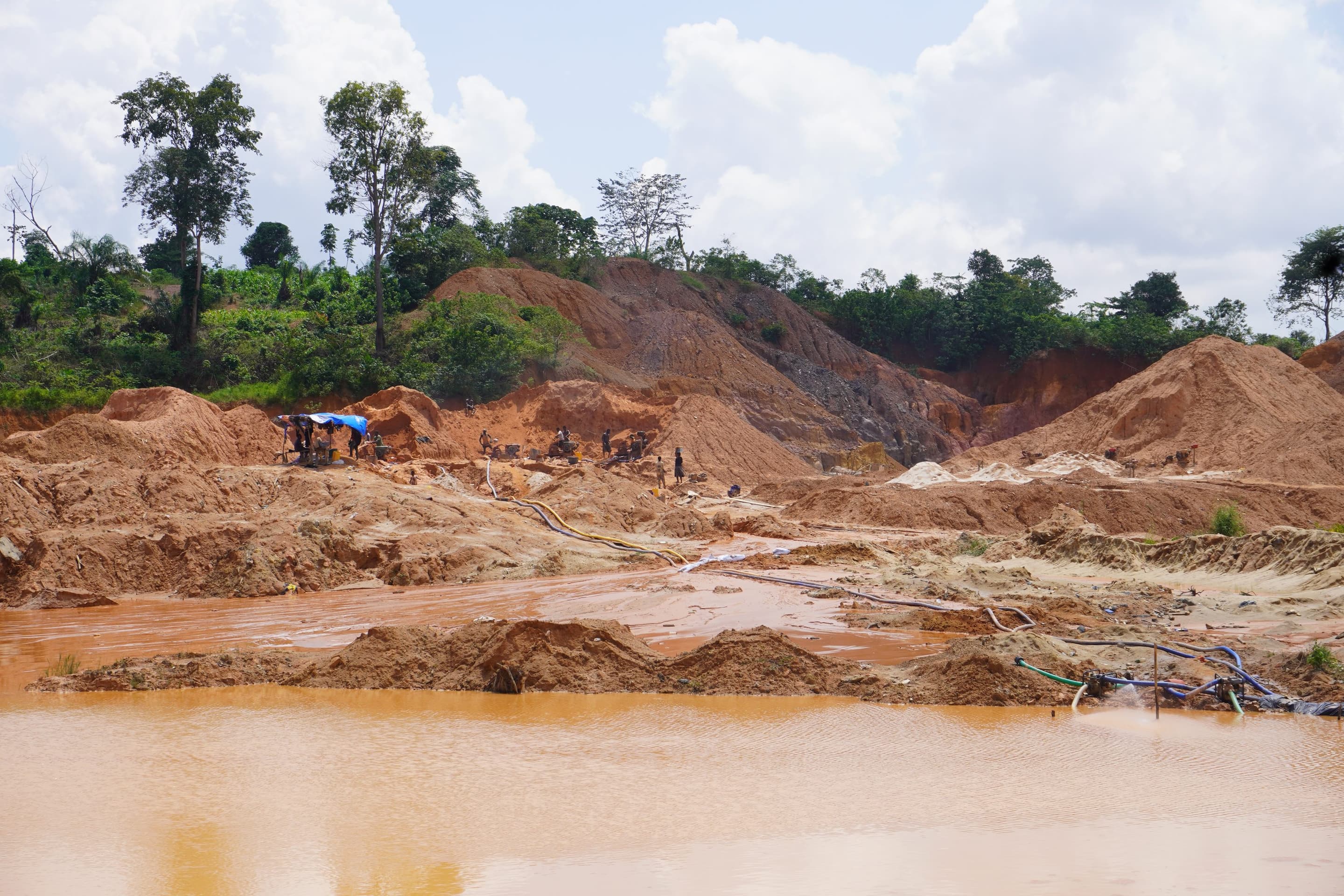
5,101 hectares of mined ground, on a forty-year clock.
[ Land Revive and Thrive · Verra VM0047 · Ghana ]
[ At a glance ]
- Location
- Sefwi Bekwai, Western North Region, Ghana
- Landscape
- Cocoa and oil palm belt, between Bia National Park and the Krokosua and Sukuma forest reserves
- Project area
- 5,101+ hectares across two clusters, roughly 30 enrolled parcels
- Land tenure
- Land access and carbon rights agreements executed per parcel — stool, family and individual title — for the 40-year crediting period
- Activity
- Reforestation with indigenous species. Biochar applied as a soil amendment, credited separately
- Methodology
- Verra VM0047 v1.1, area-based, dynamic performance benchmark from matched control plots
- Status
- Grouped project, project document complete. Working toward VCS registration, targeting CCB Gold
- Validation body
- Selected, NDA executed. Named on contracting
- Crediting period
- 1 January 2028 to 31 December 2067
- Target removals
- About 715,000 tCO₂e net over the 40-year period, reforestation only
- Annual profile
- About 920 credits in year one, rising to about 21,500 a year from year fourteen
- First verification
- Year three to four
- Soil baseline
- ZALF Berlin, 34 sample points, complete. Long-term monitoring lab not yet appointed
- Contracting entity
- Quick Impact Agency e.V. — Amtsgericht Berlin-Charlottenburg, VR 40254 B
All removal figures are project targets. Nothing has been issued or delivered against them.
[ Delivery confidence ]
Who delivers this
Daniel Naydenov authored the VM0047 project document, ran the validation body selection and commissioned the ZALF Berlin soil baseline. He is completing an M.Sc. at Humboldt Berlin on galamsey in Sefwi Bekwai — the same community this project restores.
Isaac Danso was born and is professionally established in the project area. Twenty years in Ghana’s cocoa sector, and an Audit Committee member of Juaboso District Assembly. The community-level money has local accountability rather than imported oversight.
Jay Credo Wonder co-founded QIA and was elected by its founding members. Seventeen years building businesses across Berlin and Accra.
ZALF Berlin tested the baseline soil. We do not measure our own baseline.
[ Consent, tenure and benefit sharing ]
Where the money goes, and who agreed to it
Net carbon revenue, after roughly 120,000 euro a year of verified project costs, is split six ways. Sixty per cent is directed locally. The developer’s own share is named rather than left as the remainder.
- 30%QIA Germany e.V. — operations, staff, compliance
- 28%Enrolled land owners, direct by mobile money. Galamsey land weighted 1.5×
- 20%Community Carbon Committee development fund
- 7%Land Owner Cooperative
- 5%Signing village chiefs, to the Lands Commission Stool Land Account
- 10%Joint QIA and CCC escrow — local permanence buffer
Consultations were convened by the Paramount Chief, conducted in Twi and Sefwi, and designed to UNDRIP principles. Consent is documented in the Traditional Council Resolution, in every enrollment agreement, and in the Community Carbon Committee Operating Agreement. The Paramount Chief takes no personal share of carbon revenue: stool revenue is remitted to the Lands Commission Stool Land Account under Article 267 of the constitution.
The grievance mechanism runs to five levels. The Community Carbon Committee — elected, independent of QIA, minimum 40% women and a designated youth seat — operates level two. Mediation by the Sefwi Bekwai Traditional Council sits at level four, under the Alternative Dispute Resolution Act 2010.
Direct carbon payments to enrolled land owners begin once early-stage finance is repaid, from roughly year twenty-one. Until then owners earn from the project in other ways: paid restoration labour, an annual land rent per hectare, biochar feedstock purchase, and on farmland a share of fruit and rubber harvest income.
[ Permanence ]
Why this does not reverse
A forest-only project carries its entire carbon stock above ground, where fire, disease, illegal logging and returning mining can take it back. The biochar does not: carbon pyrolysed out of cocoa husk and palm kernel shell and buried in the soil is stable for centuries and is not exposed to reversal at all.
Biochar is applied at 2.5 tonnes per hectare across roughly 750 hectares of the most contaminated ground. Its carbon is credited under a separate Puro.earth stream aligned to the EU Carbon Removal Certification Framework, and is deliberately excluded from the Verra quantification so that nothing is counted twice.
Against mining re-entry there are three independent mechanisms: a formal anti-mining declaration by the Paramount Chief backed by a Traditional Council Resolution; a prohibition written into every enrollment agreement for the full crediting period, breach of which suspends carbon revenue; and a 10% buffer reserve held in joint escrow.
Mercury hotspots are excluded from the enrolled parcels and will not be planted.
[ How QIA is structured ]
- 01You give in euro
- 02QIA e.V. receives and accounts for it in Berlin
- 03Funds transfer to QIA Ghana
- 04Spent on the ground in Western North
[ Next step ]
What we can send you
The project design document, the budget, the land agreements and the ZALF soil results are available under NDA. GPS survey and land agreements are completing now; offtake discussions follow that work rather than precede it.
Write to us→