
Climate Action
Land Revive and Thrive
From galamsey scar to carbon sink
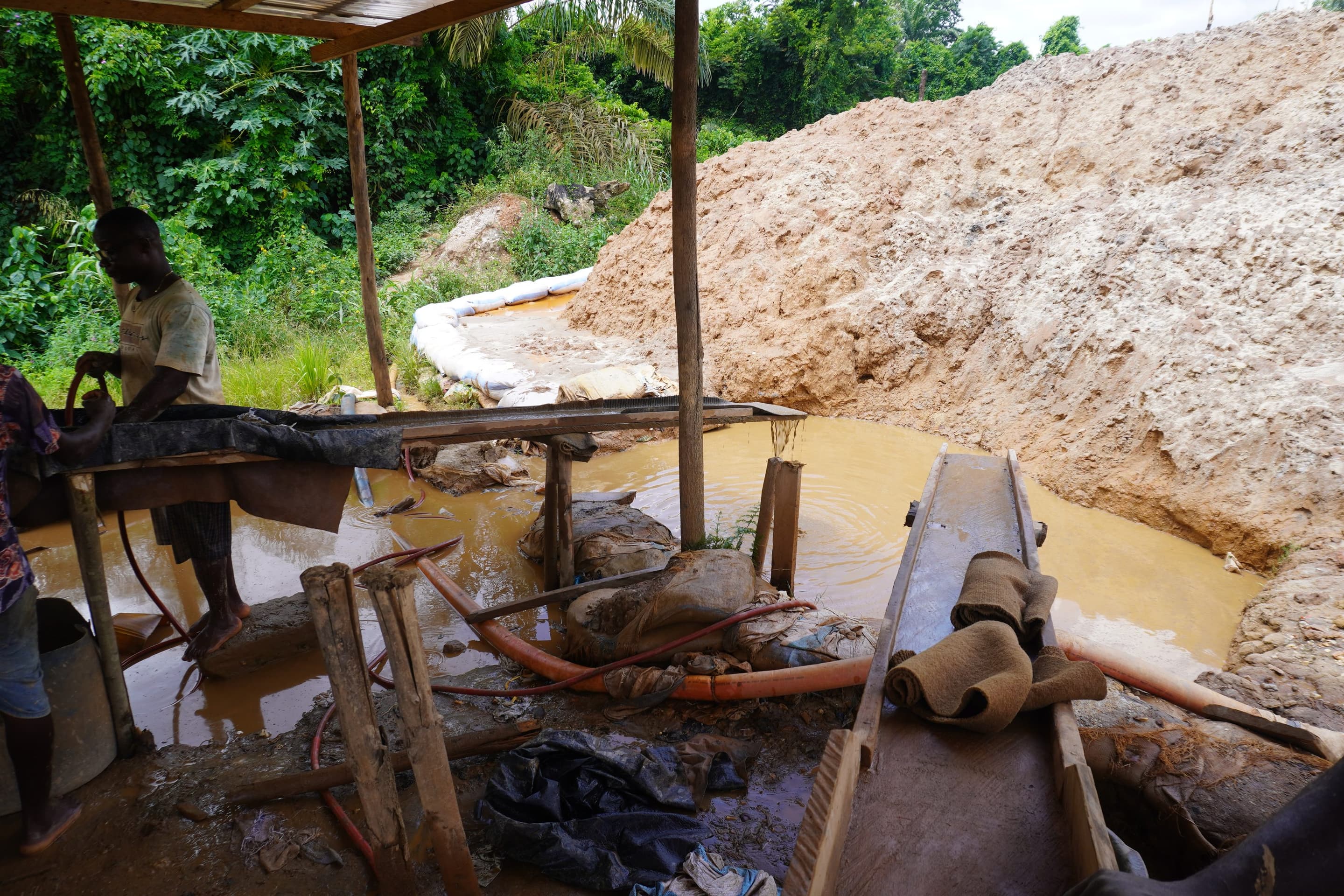
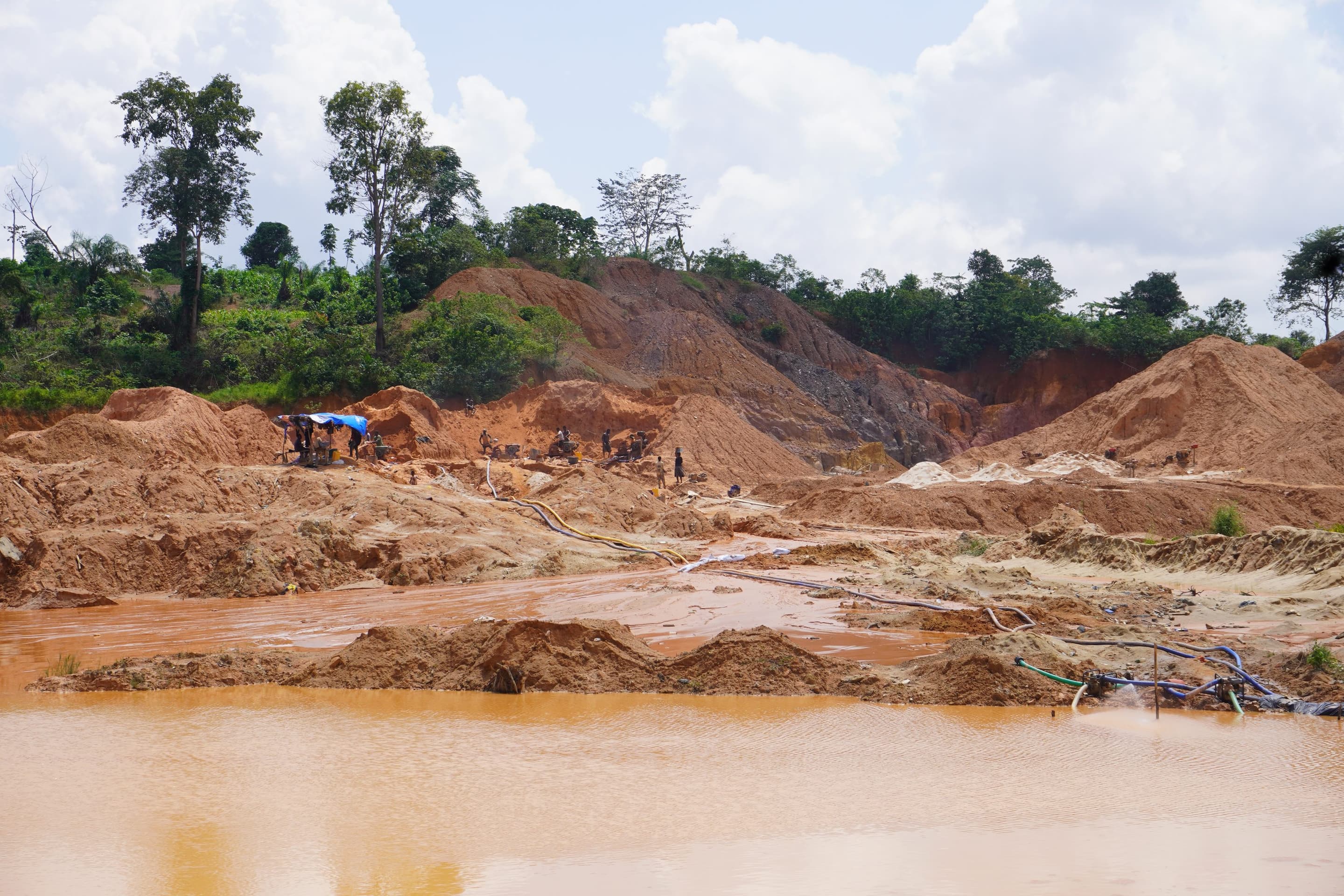
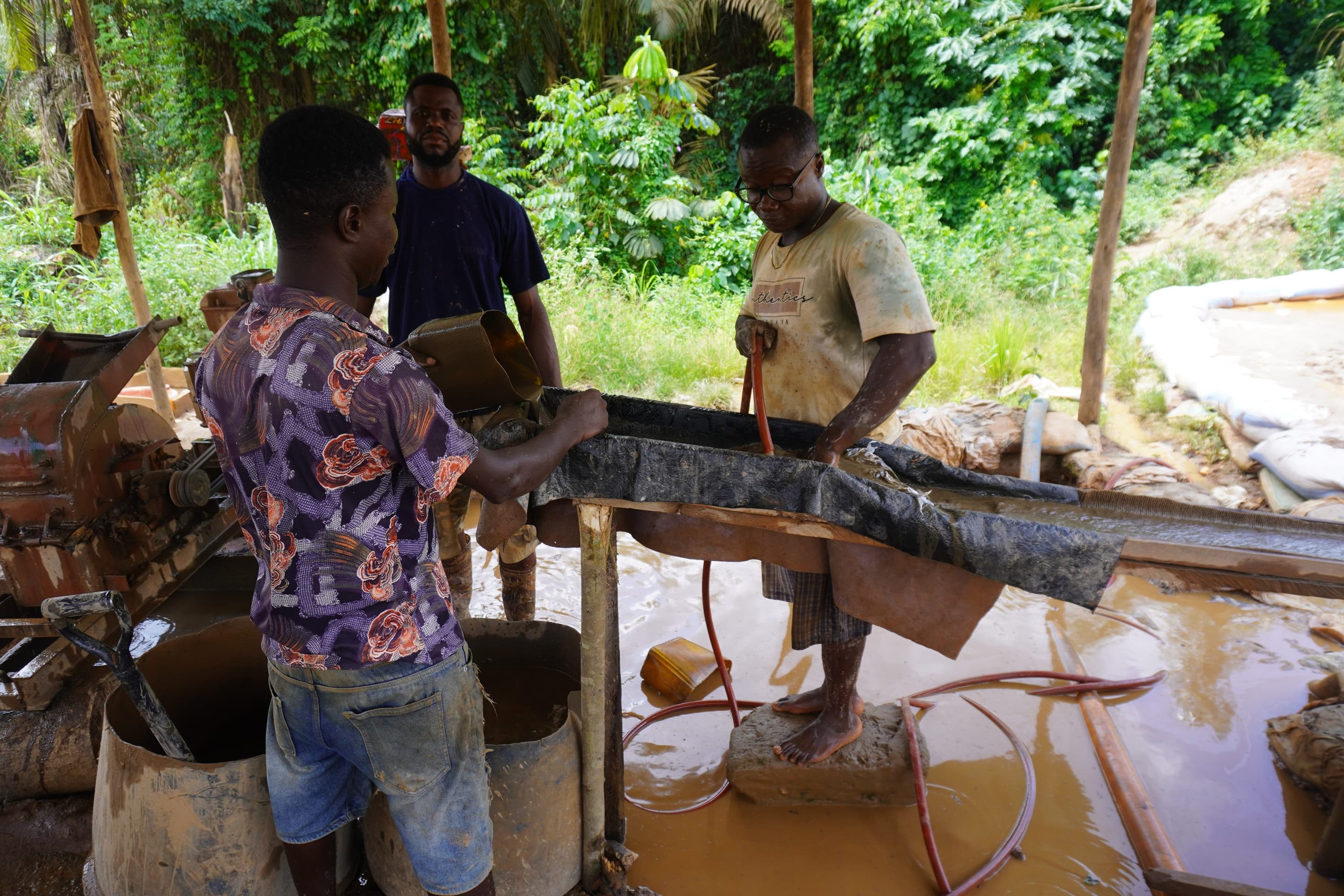
Illegal gold mining — galamsey — has stripped thousands of hectares across Ghana. It takes the topsoil, silts the rivers, and leaves ground that grows nothing.
Project Land Revive and Thrive is how we fix it: 5,101+ hectares in two clusters, held under land access and carbon rights agreements signed with each parcel's owner for the 40-year crediting period, developed to the Verra VM0047 methodology, with 60% of net carbon revenue going to the communities and local institutions that hold the land.
Destroyed by mining
Stripped soil, silted rivers, land that grows nothing.
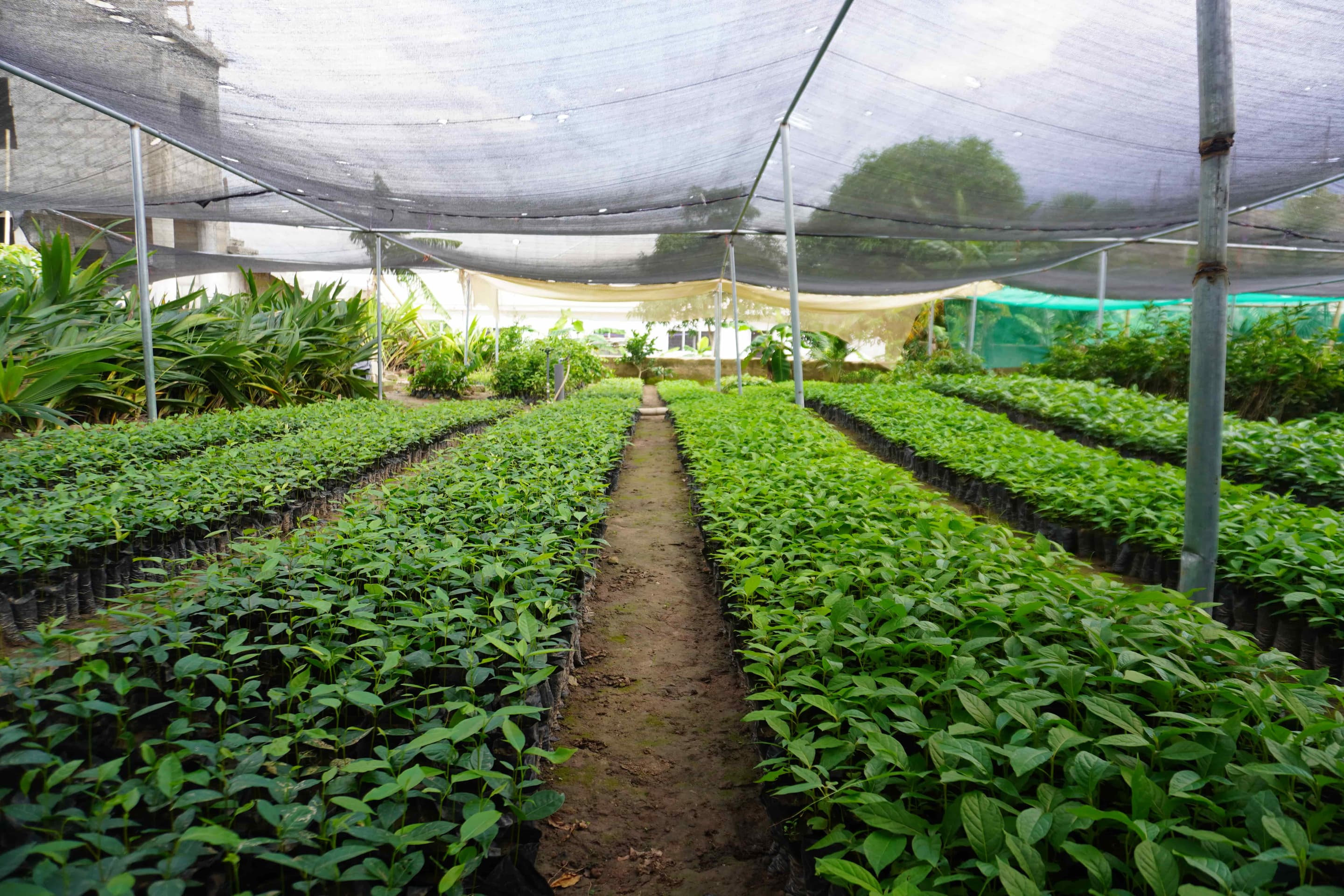
Restored with indigenous species
Secured, replanted, measured — every hectare a carbon asset.
Locked in with biochar
Cocoa husk and palm shells, carbon locked for centuries.
Owned by the community
60% of net revenue goes to the people who restored it.
[ Land Revive and Thrive · a carbon project ]
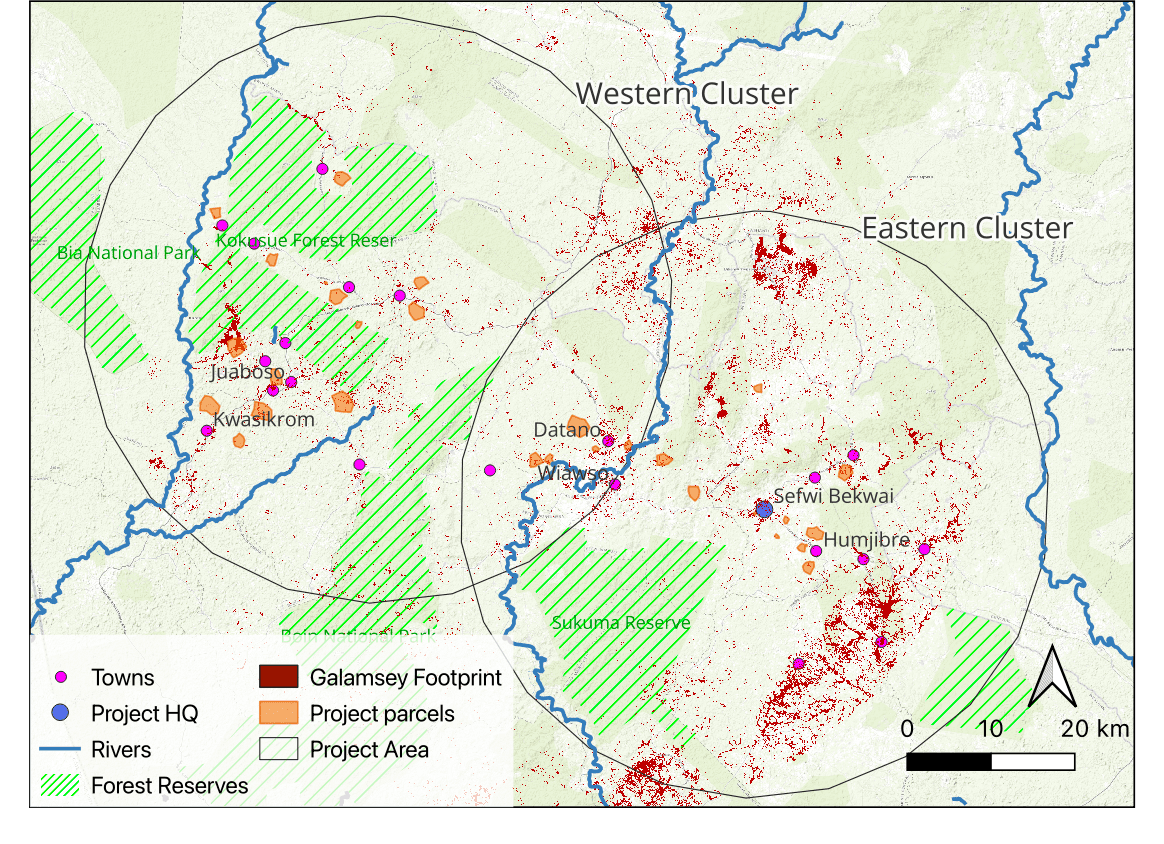
Two clusters between Bia National Park and the Krokosua and Sukuma forest reserves. The red scarring is galamsey; the orange parcels are what we have secured inside it.
Soil, water, biodiversity, skills and finance have to carry each other. ZALF Berlin was engaged to test the soil on our 40-hectare pilot area, and the wider methodology is calibrated against those results. Long-term monitoring is not contracted yet; we would rather it ran through Ghanaian laboratories.
Reading the map
- Galamsey footprint
- Land stripped by illegal small-scale gold mining. This is what we restore.
- Project parcels
- Sites secured for restoration across the Western and Eastern clusters.
- Forest reserves
- Bia National Park, Krokosua and Sukuma — the intact forest we work outward from.
- Project HQ
- Sefwi Bekwai, where the field team is based.
[ The Ghana project ]
- 5,101hectares
- In active restoration
- 2 milliontrees
- To be planted
- 715,000t CO₂
- To be sequestered
Planting and sequestration figures are project targets, not delivered results. Developed to the Verra VM0047 methodology and working toward VCS/CCB registration. Baseline soil testing on the 40-hectare pilot area was carried out by ZALF Berlin.
But trees are not all we do
So we added a second component to our program: biochar.
Organic charcoal made from cocoa husk and palm shell, heated without oxygen. Carbon that stays bound for a thousand years — long after the forest above it has lived and died.
[ The second carbon method ]
Western North is cocoa and oil palm country. Every harvest leaves husk and shell behind — a feedstock that costs nothing and nobody else is bidding for.
2,500 ha
stripped by galamsey
64.1 mg/kg
peak arsenic, 3.2x the WHO guideline
No licensed operator
the mining here was illegal, so no company owes a cleanup
30 parcels
stool, family and individual title
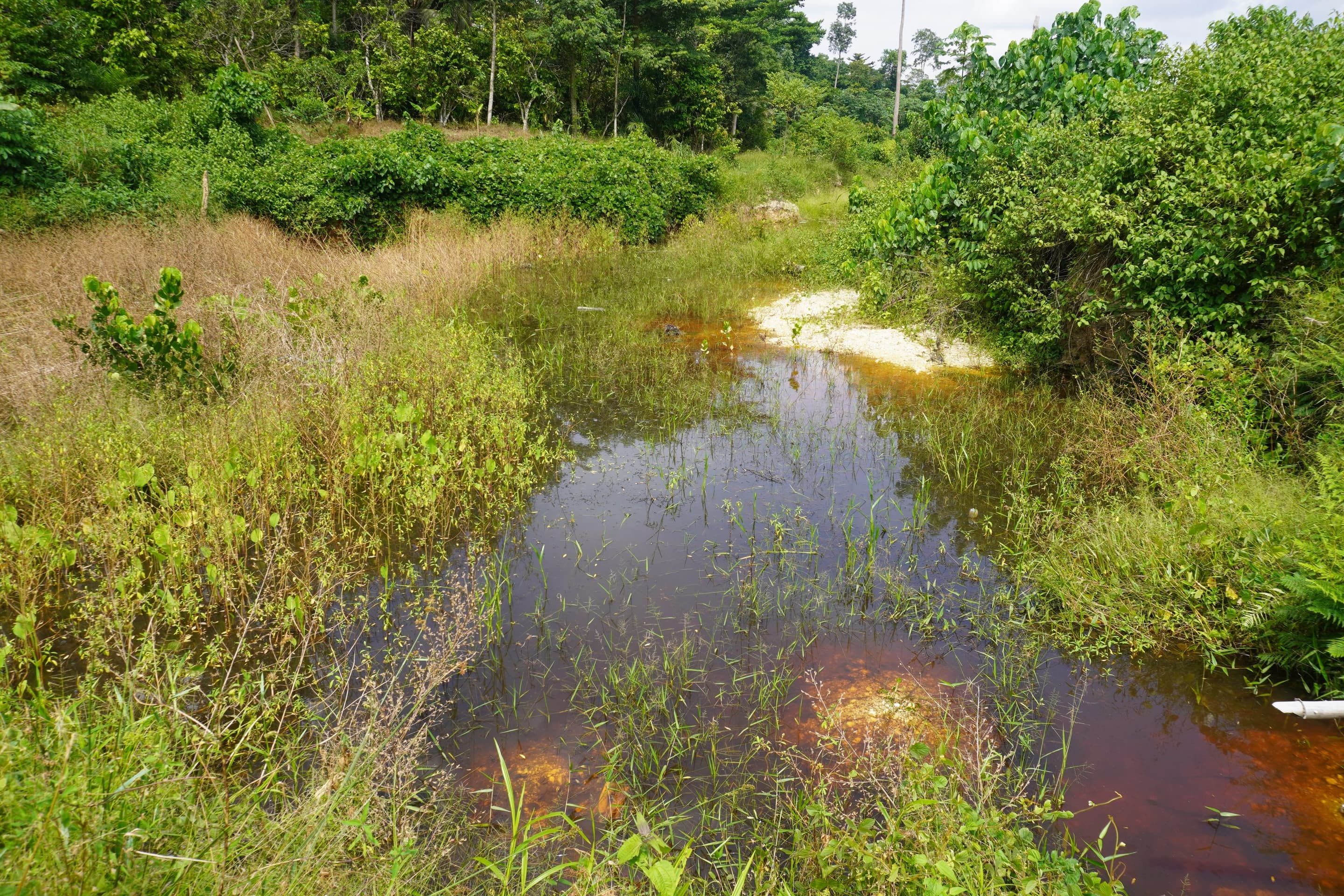
pH 4.89
mean soil acidity at baseline
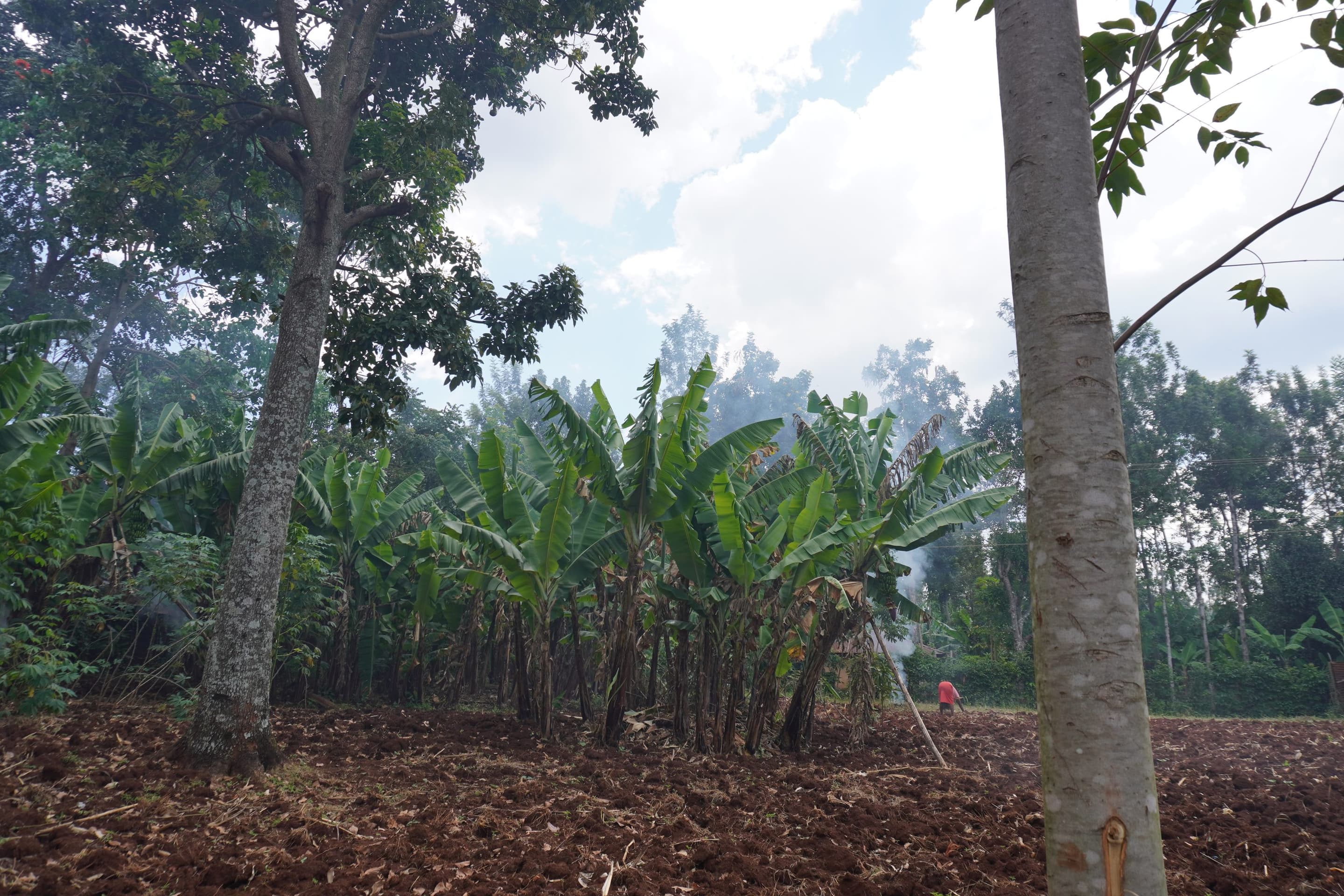
700 stems/ha
rubber and native timber on mined ground
60%
of net carbon revenue stays local
What happens next
The project is scientifically validated and working toward VCS/CCB registration. The next phase is scaling biochar production against the cocoa and palm residue this region already produces and currently wastes.
If you buy carbon removals, fund restoration, or work in Ghana's Western North, we would like to hear from you.